When embarking on the journey to create a basement lounge, the first step is to thoroughly assess the space available. Understanding the dimensions of your basement is crucial, as it will dictate not only the type of furniture you can incorporate but also the audio equipment that will best suit the environment. Measure the length, width, and height of the room, taking note of any architectural features such as support beams, windows, and doorways that may influence your design choices.
For instance, a basement with low ceilings may require more compact speakers or a soundbar rather than traditional floor-standing speakers, which could overwhelm the space. Additionally, consider the layout of your basement lounge. Is it an open-concept area, or does it have distinct sections?
The arrangement of furniture can significantly impact sound distribution. For example, if you have a sectional sofa positioned against one wall, it may create a natural sound barrier that could affect audio clarity. Visualizing how people will interact within the space is essential; will they be seated close to the speakers, or will they be spread out?
This understanding will help you make informed decisions about speaker placement and overall sound system design.
Key Takeaways
- Understanding the size and layout of your basement lounge is crucial for determining the best audio setup.
- Identifying the purpose and usage of the sound system will help you choose the right equipment for your needs.
- Setting a realistic budget for equipment and installation is essential for a successful sound system setup.
- Selecting the best speakers for your basement lounge involves considering factors such as size, power, and sound quality.
- Understanding the role of amplifiers and receivers is important for achieving the desired audio output in your basement lounge.
Determining Your Audio Needs: Identifying the Purpose and Usage of the Sound System
Before investing in a sound system, it is vital to identify its intended purpose within your basement lounge. Are you planning to use it primarily for movie nights, gaming sessions, or hosting parties with music? Each of these activities has different audio requirements.
For instance, if your primary focus is on watching films, a surround sound system with multiple speakers positioned around the room will enhance the cinematic experience by providing immersive audio that complements the visuals. On the other hand, if your lounge is meant for casual gatherings with friends, a simpler stereo setup might suffice. Moreover, consider how often you will use the sound system and for what duration.
If you envision frequent use for long periods, investing in higher-quality equipment may be worthwhile to ensure durability and superior sound quality. Additionally, think about whether you want to integrate smart technology into your audio setup. Many modern sound systems offer features like voice control and streaming capabilities, which can enhance convenience and accessibility.
By clearly defining your audio needs, you can tailor your sound system to fit seamlessly into your lifestyle.
Budgeting for Your Sound System: Setting a Realistic Budget for Equipment and Installation
Establishing a budget is a critical step in the process of outfitting your basement lounge with a sound system. The range of audio equipment available can vary dramatically in price, from entry-level options to high-end audiophile gear. It’s essential to determine how much you are willing to spend not only on the equipment itself but also on installation costs if you plan to hire professionals.
A well-thought-out budget will help you prioritize your purchases and avoid overspending on unnecessary features. When creating your budget, consider breaking it down into categories such as speakers, amplifiers, receivers, and installation services. For example, if you allocate a larger portion of your budget to high-quality speakers, you may need to compromise on other components like cables or accessories.
Researching various brands and models within your budget range can also yield valuable insights into what offers the best value for your money.
Choosing the Right Speakers: Selecting the Best Speakers for Your Basement Lounge
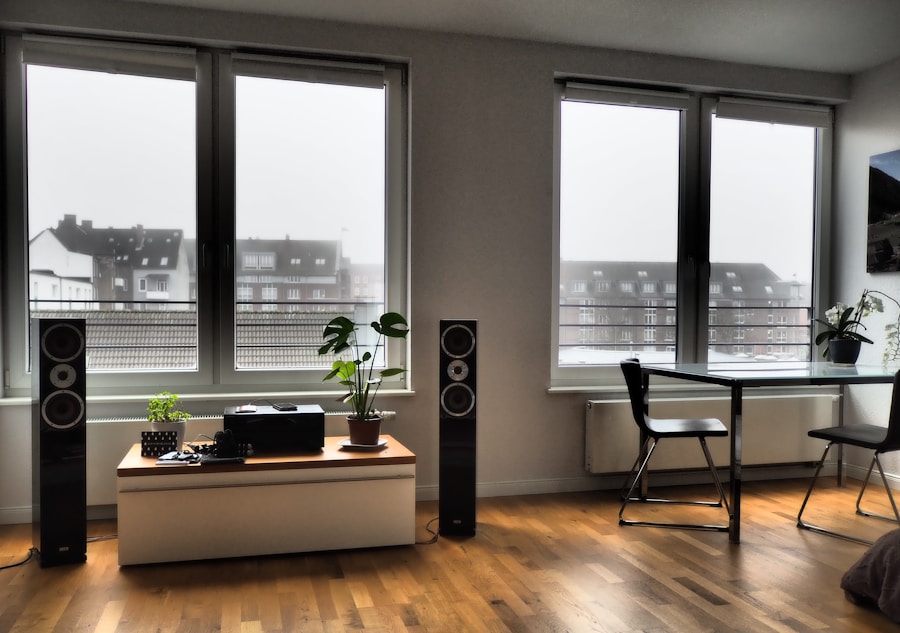
Selecting the right speakers is one of the most critical decisions when designing your basement lounge’s sound system. The type of speakers you choose will significantly influence the overall audio experience. There are several options available, including bookshelf speakers, floor-standing speakers, in-wall speakers, and soundbars.
Each type has its advantages and disadvantages depending on your space and audio needs. For instance, bookshelf speakers are compact and versatile, making them ideal for smaller areas or as part of a multi-channel setup. Consider also the specifications of the speakers you are interested in.
Look for details such as frequency response, sensitivity ratings, and power handling capabilities. A speaker with a wide frequency response will reproduce a broader range of sounds, from deep bass to high treble. Sensitivity ratings indicate how efficiently a speaker converts power into sound; higher sensitivity means louder output with less power.
Additionally, think about aesthetics—speakers come in various designs and finishes that can complement your basement lounge’s decor. Ultimately, choosing speakers that align with both your audio preferences and design sensibilities will create a harmonious environment.
Amplifiers and Receivers: Understanding the Role of Amplifiers and Receivers in Your Sound System
Amplifiers and receivers play pivotal roles in any sound system by enhancing audio signals and distributing them to speakers. An amplifier boosts low-level audio signals from sources like CD players or streaming devices so that they can be heard clearly through speakers. If you’re opting for passive speakers (which require an external power source), an amplifier is essential for driving them effectively.
On the other hand, active speakers have built-in amplifiers and can connect directly to audio sources without needing an external unit. Receivers serve as the central hub of your audio system, combining multiple functions into one device. They typically include an amplifier along with radio tuners and inputs for various devices such as Blu-ray players, gaming consoles, and streaming services.
When selecting a receiver, consider factors such as the number of channels it supports (which determines how many speakers can be connected) and its compatibility with modern technologies like Dolby Atmos or DTS:X for immersive surround sound experiences. Understanding these components’ roles will help you make informed decisions about which products best suit your basement lounge’s audio setup.
Wiring and Installation: Planning for Proper Wiring and Installation of Your Sound System
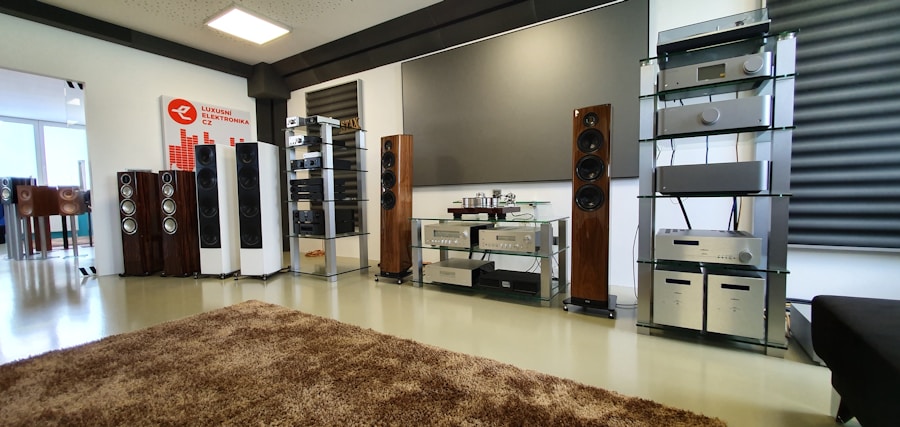
Proper wiring and installation are crucial for achieving optimal performance from your sound system in your basement lounge. The layout of your room will dictate how you run cables from your audio sources to your speakers and receiver. It’s essential to plan this out carefully to avoid cluttered spaces or visible wires that detract from the aesthetic appeal of your lounge.
In many cases, running wires through walls or ceilings can create a cleaner look while also protecting them from damage. When selecting cables for your sound system, consider using high-quality speaker wire and interconnects to ensure minimal signal loss and interference. The gauge of speaker wire can affect performance; lower gauge numbers indicate thicker wire that can carry more power over longer distances without degradation.
Additionally, if you’re not comfortable with DIY installation or wiring tasks, hiring a professional installer can save time and ensure that everything is set up correctly according to industry standards.
Considering Acoustic Treatment: Addressing Acoustic Challenges in Your Basement Lounge
Acoustic treatment is often overlooked but is vital for achieving high-quality sound in any listening environment, especially in basements where hard surfaces can create unwanted echoes and reverberation. The unique characteristics of basement spaces—such as concrete floors and walls—can lead to sound reflections that muddy audio clarity. To combat these challenges, consider incorporating acoustic panels or foam into your design.
These materials absorb sound waves and reduce echo, resulting in clearer audio playback. In addition to panels, think about other elements that can enhance acoustics in your basement lounge. Rugs or carpets can help dampen sound reflections from hard floors while adding warmth to the space visually.
Furniture placement also plays a role; strategically positioning sofas or chairs can help break up sound waves and improve overall acoustics. By addressing these acoustic challenges proactively, you can create an environment that allows your sound system to perform at its best.
Future-Proofing Your Sound System: Planning for Upgrades and Technological Advancements in Audio Technology
As technology continues to evolve rapidly, future-proofing your sound system is essential for ensuring longevity and adaptability in your basement lounge setup. One way to achieve this is by selecting components that support current standards while allowing for potential upgrades down the line. For instance, investing in a receiver with multiple HDMI inputs and support for 4K video ensures compatibility with future devices without needing immediate replacement.
Additionally, consider modular systems that allow for easy upgrades over time. Many manufacturers offer products designed to work seamlessly together; this means you can start with a basic setup and gradually add components like additional speakers or subwoofers as your needs change or as new technologies emerge. Staying informed about trends in audio technology—such as advancements in wireless streaming or immersive audio formats—will help you make educated decisions about when to upgrade specific components while maximizing your investment in quality sound for years to come.
If you’re considering transforming your Brooklyn basement lounge into a custom home theater, you may want to check out this article on custom home builds tailored architectural solutions. This article provides valuable insights on how to create a unique and personalized space that meets your specific needs and preferences. By following a step-by-step basement remodeling process, as outlined in our step-by-step basement remodeling process, you can ensure that your basement lounge is transformed into a functional and stylish entertainment area. Additionally, if you’re interested in converting your basement into a home office, you may find this article on basement home office conversions helpful in creating a productive and comfortable workspace.
FAQs
What factors should I consider when choosing a sound system for my Brooklyn basement lounge?
When choosing a sound system for your Brooklyn basement lounge, consider the size and layout of the space, the type of music or sound you will be playing, the acoustics of the room, and your budget.
What are the different types of sound systems available for basement lounges?
There are various types of sound systems available for basement lounges, including bookshelf speakers, floor-standing speakers, in-wall or in-ceiling speakers, soundbars, and subwoofers. Each type has its own advantages and is suitable for different room layouts and purposes.
How can I ensure good sound quality in my basement lounge?
To ensure good sound quality in your basement lounge, consider investing in high-quality speakers and amplifiers, properly positioning the speakers for optimal sound distribution, and addressing any acoustic issues in the room such as echoes or reverberations.
What are some popular sound system brands for basement lounges?
Some popular sound system brands for basement lounges include Bose, Sonos, Klipsch, Yamaha, Polk Audio, and JBL. These brands offer a range of products suitable for different room sizes and budgets.
Should I consider hiring a professional to install the sound system in my basement lounge?
Hiring a professional to install the sound system in your basement lounge can ensure that the speakers are properly positioned and the system is set up for optimal sound quality. A professional can also help with addressing any acoustic issues in the room.