Basements present unique challenges when it comes to flooring. One of the primary concerns is moisture. Basements are often prone to dampness due to their location below ground level, which can lead to water seepage and high humidity levels.
This moisture can cause significant damage to flooring materials, leading to warping, mold growth, and unpleasant odors. Homeowners must be vigilant about assessing the moisture levels in their basements before selecting flooring options. The presence of water can also affect the structural integrity of the home, making it essential to address any underlying issues before proceeding with flooring installation.
Another challenge is temperature fluctuations. Basements tend to be cooler than the rest of the house, which can impact the comfort level of the space and the performance of certain flooring materials. For instance, some types of flooring may become too cold underfoot in winter months, making the basement less inviting.
Additionally, the thermal properties of various materials can influence energy efficiency in the home. Therefore, understanding how temperature and moisture interact in a basement environment is crucial for selecting appropriate flooring that will withstand these conditions over time.
Key Takeaways
- Understanding the Challenges of Basement Flooring:
- Basements are prone to moisture, humidity, and temperature fluctuations, making it challenging to choose the right flooring.
- Choosing the Right Type of Durable Flooring:
- Consider options like vinyl, ceramic tile, epoxy, or concrete for durable basement flooring that can withstand moisture and humidity.
- Preparing the Basement for Flooring Installation:
- Properly seal and level the concrete subfloor, address any moisture issues, and ensure a dry and stable base for the new flooring.
- Installation Tips for Durable Basement Flooring:
- Use proper adhesives and installation techniques suitable for the chosen flooring material, and consider hiring a professional for best results.
- Maintaining and Cleaning Durable Basement Flooring:
- Regularly clean and maintain the flooring to prevent moisture buildup and damage, and use appropriate cleaning products for the specific flooring material.
Choosing the Right Type of Durable Flooring
When it comes to selecting durable flooring for a basement, several options stand out due to their resilience against moisture and temperature changes. Vinyl flooring is a popular choice because it is water-resistant and available in a wide range of styles and colors. Luxury vinyl planks (LVP) mimic the appearance of hardwood or stone while providing a durable surface that can withstand spills and humidity.
This makes LVP an excellent option for homeowners looking to achieve a stylish look without compromising on practicality. Another viable option is tile flooring, particularly porcelain or ceramic tiles. These materials are inherently resistant to moisture and can handle temperature fluctuations well.
They are also easy to clean and maintain, making them ideal for high-traffic areas in the basement. Additionally, tiles can be installed with radiant heating systems, providing warmth during colder months and enhancing comfort in the space. However, it is essential to consider the installation process, as tile requires a solid subfloor and proper leveling to prevent cracking.
Preparing the Basement for Flooring Installation
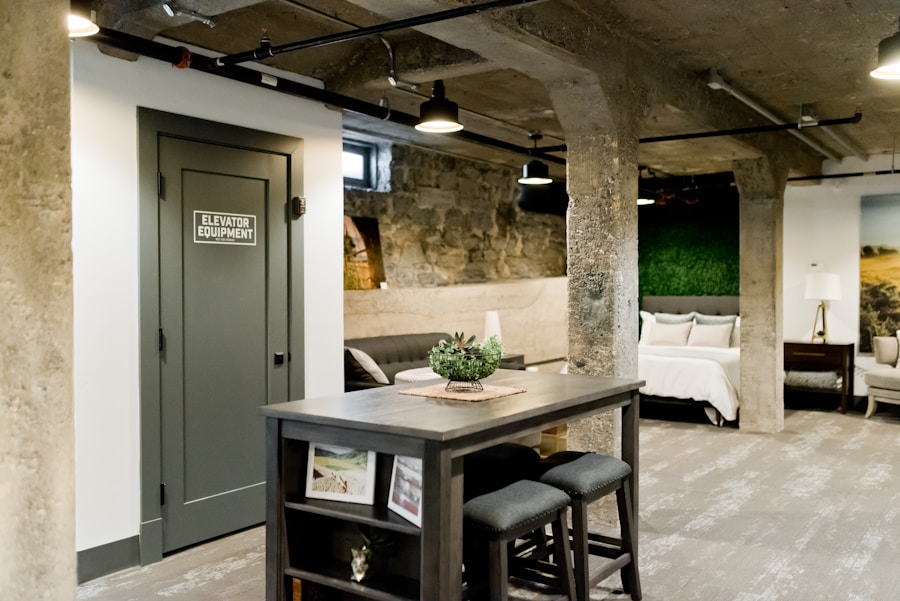
Before installing new flooring in a basement, thorough preparation is essential to ensure a successful outcome. The first step involves assessing the condition of the existing floor. This includes checking for cracks, uneven surfaces, or signs of water damage.
Any issues should be addressed before proceeding with installation. For instance, if there are cracks in the concrete slab, they should be filled with an appropriate sealant to prevent moisture from seeping through and damaging the new flooring. Next, it is crucial to address moisture concerns by implementing a vapor barrier if necessary.
A vapor barrier is a protective layer that prevents moisture from penetrating through the floor and damaging the flooring material above. This is particularly important in basements where humidity levels are high or where there is a history of water intrusion. Installing a dehumidifier can also help regulate moisture levels in the basement, creating a more stable environment for flooring installation.
Installation Tips for Durable Basement Flooring
Proper installation techniques are vital for ensuring that basement flooring performs well over time. For vinyl flooring, it is essential to acclimate the planks to the basement’s temperature and humidity levels before installation. This helps prevent expansion or contraction after installation, which can lead to gaps or buckling.
Additionally, using an appropriate underlayment can provide extra cushioning and sound insulation while also helping to manage moisture. When installing tile flooring, careful planning is necessary to ensure that tiles are laid out evenly and aligned correctly. It is advisable to start from the center of the room and work outward, which helps create a balanced look.
Using spacers between tiles ensures consistent grout lines and prevents shifting during the drying process. After installation, allowing adequate time for grout and adhesive to cure is crucial before walking on the new floor or placing furniture back in the space.
Maintaining and Cleaning Durable Basement Flooring
Maintaining durable basement flooring is essential for preserving its appearance and functionality over time. Regular cleaning routines should be established based on the type of flooring installed. For vinyl flooring, sweeping or vacuuming regularly helps remove dirt and debris that can scratch the surface.
Occasional mopping with a mild detergent can keep the floor looking fresh without damaging its finish. Tile flooring requires similar maintenance but may need additional attention due to grout lines that can accumulate dirt and stains over time.
Sealing grout lines periodically can also enhance their durability and resistance to stains, making cleaning easier in the long run.
Enhancing the Aesthetics of Your Basement with Durable Flooring
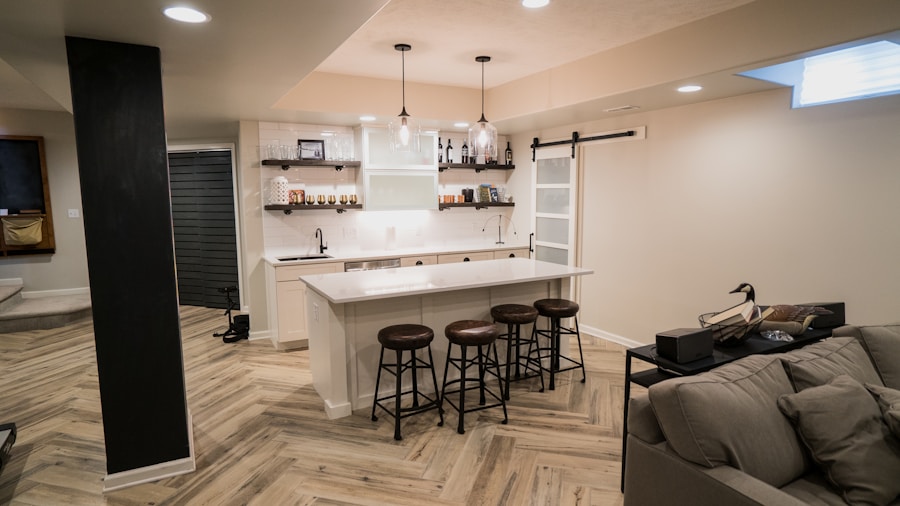
Durable flooring options do not have to compromise aesthetics; in fact, they can significantly enhance the overall look of a basement space. For instance, luxury vinyl planks come in various designs that mimic natural materials like hardwood or stone, allowing homeowners to achieve a high-end look without the associated maintenance concerns. The versatility of vinyl means it can fit into various design themes, from rustic to modern.
Tile flooring also offers numerous aesthetic possibilities. With an array of colors, patterns, and textures available, homeowners can create unique designs that reflect their personal style. For example, large-format tiles can create a seamless look that makes a basement feel more expansive, while patterned tiles can add visual interest and character to specific areas like a bar or entertainment zone.
Incorporating area rugs can further enhance comfort while adding warmth and style to the space.
Addressing Moisture and Humidity Concerns in Basement Flooring
Moisture management is critical when it comes to basement flooring installation and maintenance. Homeowners should consider investing in moisture detection tools to monitor humidity levels regularly. If humidity consistently exceeds recommended levels (typically above 60%), additional measures may be necessary to mitigate moisture issues.
In addition to monitoring humidity levels, addressing potential sources of water intrusion is vital for long-term success. This may involve inspecting gutters and downspouts to ensure they direct water away from the foundation or applying waterproofing sealants on exterior walls.
In some cases, installing sump pumps or drainage systems may be necessary to manage groundwater effectively. By proactively addressing these concerns, homeowners can create a healthier environment for their durable flooring.
Enjoying a Functional and Stylish Basement with Durable Flooring
Investing in durable flooring for a basement not only enhances its functionality but also contributes significantly to its overall aesthetic appeal. By understanding the unique challenges associated with basement environments—such as moisture and temperature fluctuations—homeowners can make informed decisions about suitable flooring options that will stand the test of time. With proper preparation, installation techniques, and ongoing maintenance practices in place, a basement can transform into a stylish and functional space that adds value to any home.
The right choice of durable flooring allows homeowners to enjoy their basements fully, whether as recreational areas, home offices, or guest suites. By addressing moisture concerns proactively and selecting materials designed for resilience against damp conditions, one can create an inviting atmosphere that complements the rest of the home while ensuring longevity and ease of care for years to come.
If you are looking for more information on basement construction, check out this article on basementremodelingesg.com. This article provides valuable insights and tips on how to properly construct your basement to ensure durability and longevity. It complements the advice on incorporating durable flooring into your Brooklyn basement design, as a strong foundation is essential for any renovation project.
FAQs
What are the benefits of incorporating durable flooring into a Brooklyn basement design?
Durable flooring in a Brooklyn basement design can withstand high traffic, moisture, and potential flooding, making it a practical and long-lasting choice for the space.
What are some popular options for durable flooring in a Brooklyn basement?
Popular options for durable flooring in a Brooklyn basement include vinyl plank flooring, ceramic tile, concrete, and engineered hardwood.
How can I ensure that the durable flooring in my Brooklyn basement is properly installed?
To ensure proper installation of durable flooring in your Brooklyn basement, it is recommended to hire a professional contractor with experience in basement renovations and flooring installation.
What maintenance is required for durable flooring in a Brooklyn basement?
Maintenance for durable flooring in a Brooklyn basement typically involves regular cleaning and occasional resealing or refinishing, depending on the type of flooring chosen.
Can durable flooring in a Brooklyn basement be aesthetically pleasing?
Yes, durable flooring options for a Brooklyn basement can be aesthetically pleasing, with a wide range of styles, colors, and textures available to complement the overall design of the space.